 Pop over here to an expat Aussie's food blog.
She even has a recipe for Lamingtons.
 Pop over here to an expat Aussie's food blog.
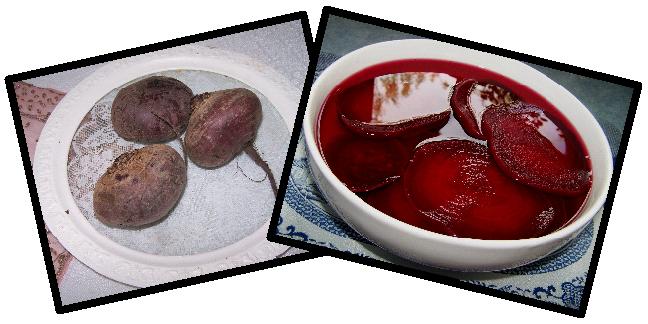 Integral to a good Australian salad is beetroot. I don't know if Australian beetroot is the same as what the U.S. calls beets. Perhaps it's not. You see in the Land of Oz beetroot has come to define responsiveness to Australian tastes in American fast foods. Maccas and Hungry Jacks (Burger Chief in the U.S.) put beetroot on hamburgers to satisfy Australians. However, there is a rising underswell of resentment against Subway who refuse to respond. Over at An Aussie in America, Stuart from Western Australia (WA) is having a big whinge. If you pop over here you will find a quite graphic expression of pro-beetroot resentment against Subway. Anyway, here is beetroot the Australian way. This is the way my mother, Phyllis, used to do it.
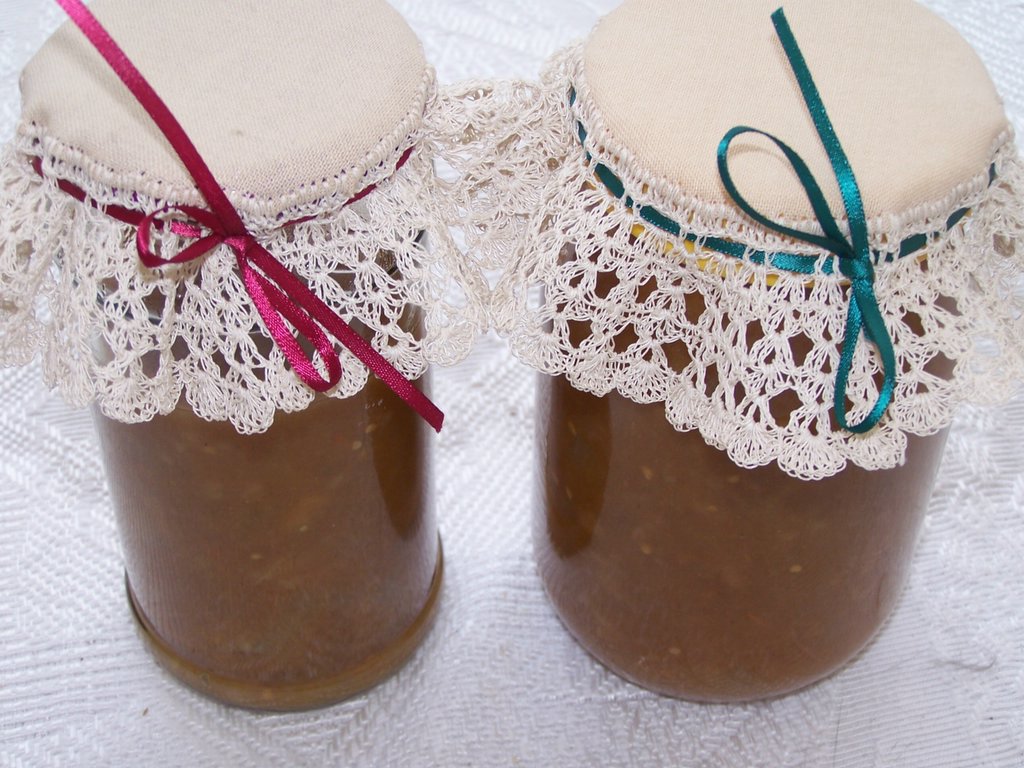 I grew up in Bowen, at the northern end of The Whitsundays in North Queensland, which is the winter tomato capital of Australia. The crop is croppin' and so it is Tomato Relish time. The recipe comes from the Bowen Methodist Ladies Cook Book which I acquired as a new bride back in the '60s. That cook book has long since disintegrated - it was roneo-d long before the advent of photocopiers. Even the Methodist Church does not exist. It joined with the Presbyterians and the Congregationalists to form the Uniting Church. The recipe continues now in my hand written cookbook - once-bound but now loose-leafed - and on this blog and hopefully into the recipe books of others. This relish was made from my crop of yellow tomatoes. Red tomatoes make a red relish. Yellow tomatoes make a brown relish - but just as tasty and yummy. This relish is great on cold meats, bread and butter, or mashed potatoes.
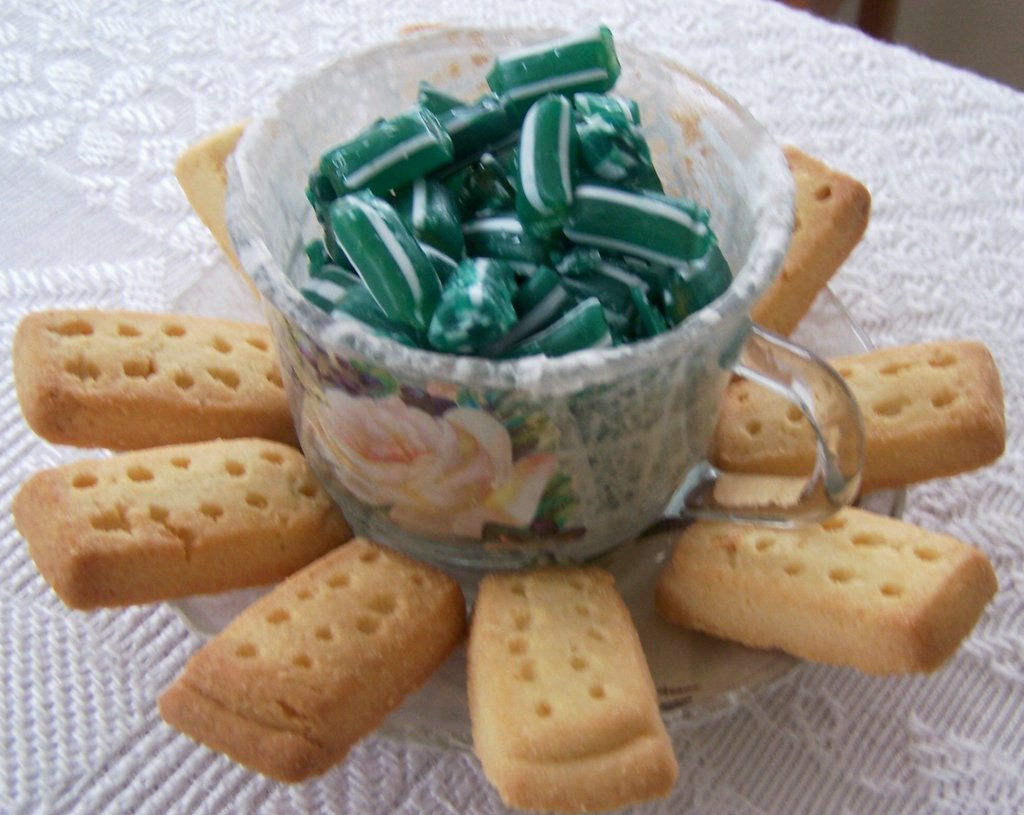 The pretty little vignette above was part of the centrepiece in a table-setting challenge set by Jennifer at The Felt Mouse. You can read all about it at The Trad Pad. The cup and saucer are plain glass I've decoupaged with rice paper and a pretty rose. Around the saucer are some of Mac's Macadamia Butter Melts and in the cup are some green and white boiled lollies known to some as "rock candy". I am rather proud of the Macadamia Melts. In this globalized world, the Melts have that wonderful ingredient, the Macadamia Nut, which is an Australian native and was, before commercialization, known as the Queensland Nut. The Melts come from Mac's Shortbread Company in Kerang here in Victoria. A beautiful melt in your mouth product that is still home-grown and home-made.
 Barb over at Woof Nanny and Dog-eared and Underlined mentioned in a comment on a post below about how she enjoyed knowing the different names there are for things in different countres. This got me thinking. Rissoles I thought. Hamburgers in some times and places but in the Land of Oz they always were, and continue to be, rissoles: tasty, cheap, nutritious.
~~~~~~~~~~~
RISSOLES
Barb over at Woof Nanny and Dog-eared and Underlined mentioned in a comment on a post below about how she enjoyed knowing the different names there are for things in different countres. This got me thinking. Rissoles I thought. Hamburgers in some times and places but in the Land of Oz they always were, and continue to be, rissoles: tasty, cheap, nutritious.
~~~~~~~~~~~
RISSOLES
Put 1kg (2.2lb) of mince (ground meat or hamburger in the US) in a bowl. There are different grades of mince but the best are those labelled Premium or Heart Smart. You will pay more for this quality but the less you pay the more fat and trimmings you get and the less quality. To the mince add: 2 slices of bread (fresh or stale) soaked in water and the water squeezed out so it is squishy and mushy; 2 onions finely diced; fresh or dried herbs of your choice and to your taste (to-day I used fresh marjoram and sage that grows in my garden); garlic to your taste sliced or crushed - I love garlic, so I used four cloves; Worcestershire Sauce (pronounced Woostersheer) and salt (hope you use iodised salt) and freshly ground pepper. The bread and the eggs are used to bind the mixture together so it doesn't break up when it hits the frying pan. Some people use flour instead of bread - but in our household the tradition is to use bread. Squish the mixture together. Then take dollops of the mixture in the palm of your hand and shape. Don't make too flat - looks awful. Don't make too fat - takes a bit of trouble to ensure it is cooked through. There are dreadful jokes in Australia about shearers' cooks who shape rissoles under their armpits! Roll the shapped meat in plain (all-purpose) flour and cook in moderately hot oil (you are using extra-virgin olive oil aren't you?). If your oil is too hot the outside will cook quickly but the inside won't be fully cooked. If you have your oil too cool the oil penetrates the rissole (greasy yuk) and the rissole will be a pale unappetising colour. Golden brown with a lightly crisp outside is what you are aiming for. Having said all that - now you have the general idea you can vary this however you like. Some people add grated carrot. Some use different sauces to flavour such as soy sauce. You can roll the shaped meat in flour, egg and breadcrumbs before frying - now that does add the kilojoules/calories! But the way I have given it to you is how we like it at our place. It is served with mashed (in the US they say riced) potatoes and peas - sometimes those wonderfully mushy peas you have with pies. Some people like barbecue sauce on their rissoles, others favour that great Aussie condiment, tomato sauce (ketchup in the US). If I was to bung it on (that means dress to impress, if you get my meaning) I would do a lovely brown onion gravy (the secret of the gravy is the use of Parisian essence - never use Gravox). Scrumptious! Comfort food! But if you are a vegetarian and turning up your nose at the meat - then substitute your favourite veges or beans for the meat and off you go with the same method.
I'm sure what are called Rissoles in the Land of Oz are not limited to the wide brown land as Australian as we may think and feel they are. Please add your exotic spice to this recipe post by telling us what you do in your country and what you call your Rissoles. Someone might also be able to enlighten the rest of us about where the word "rissole" comes from. Is it a word from some exotic cuisine?
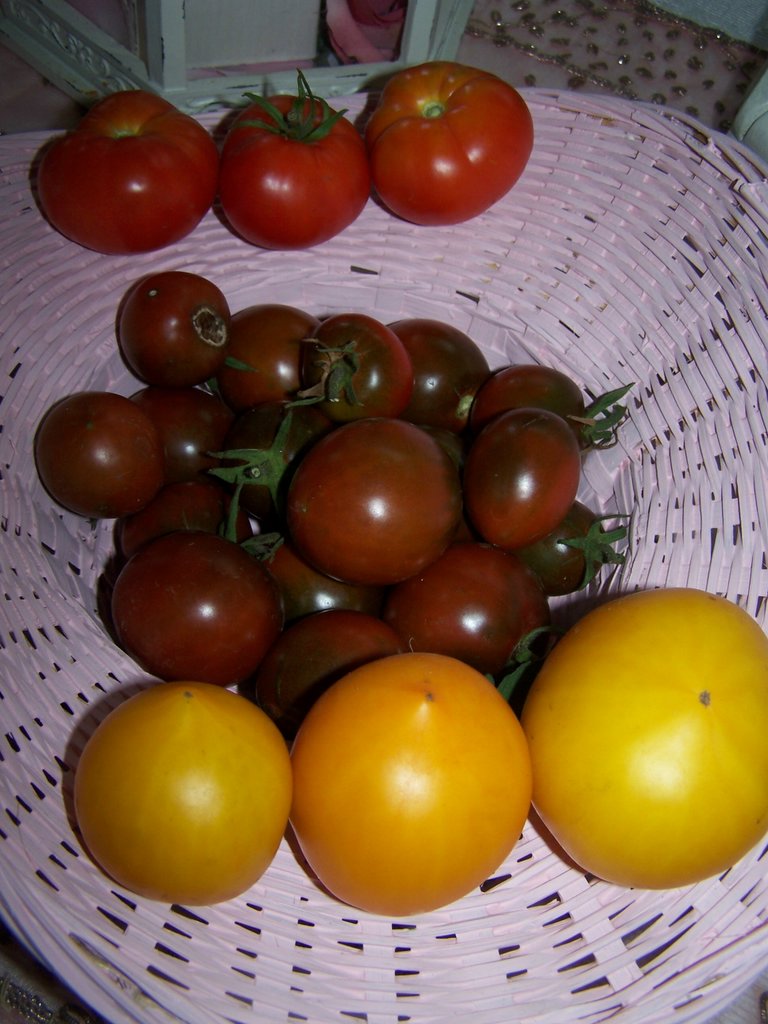 My tomatoes are really starting to crop now - with all the heat and rain. I have three tomato plants which spread themselves everywhere and I have to stake, and stake, and stake them to keep them up off the ground. The three tomato plants include two heirloom varieties - the yellow tomato, the little Black Russian, in addition to the popular Don Burke Italian variety. The Black Russians aren't really black, except when they are photographed. They are a very dark red with the top part of the fruit being on the way to black. I have discovered that the yellow tomato should not be put in a bowl with navel oranges - until you get close you can't tell them apart. Homegrown tomatoes are wonderful and flavoursome. You can use plenty of compost or organic fertiliser and not use inorganic chemicals and pesticides. And, with growing them, comes a sense of virtue and achievement.
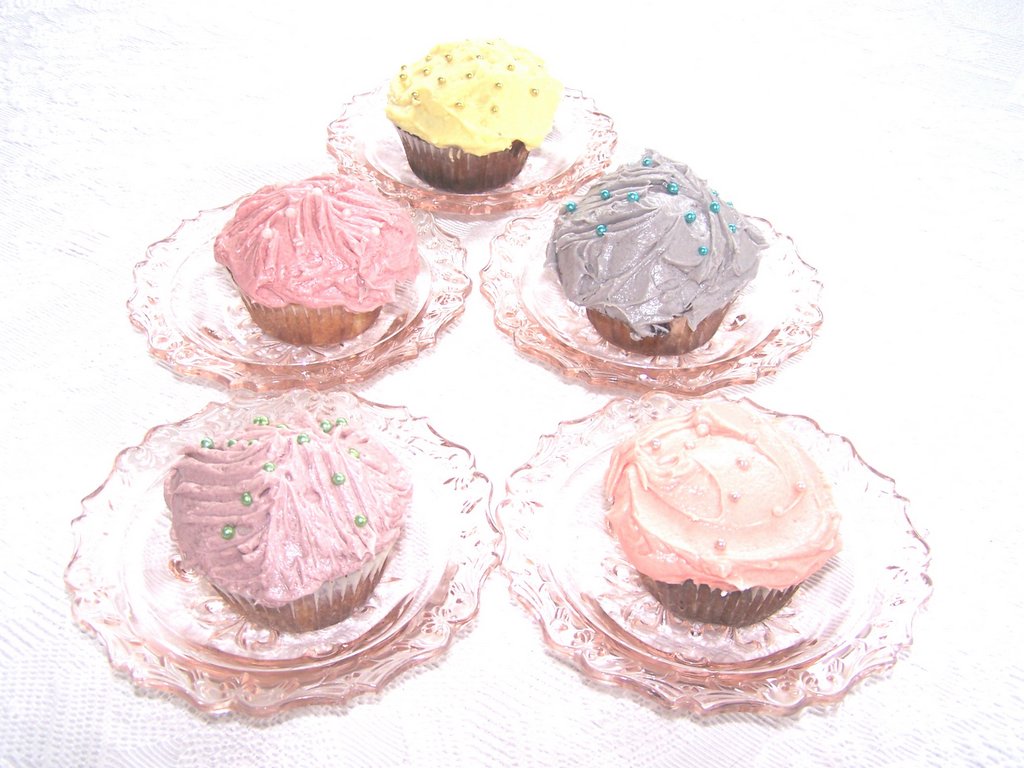 In the US, I believe, these are called Cupcakes.
Here in Oz though we have a whimsical streak and these are Fairy Cakes.
If the peaked tops are sliced off, the slice cut in half, the top covered in cream
with the half slices placed in the cream at an angle like butterfly wings,
they then become wonderful Butterfly Cakes.
Small Fairy Cakes can be cut in half, creamed in the middle, put together again rolled in pink jelly (jello to the US) and dessicated coconut and then they become Peach Cakes.
Fairy Cakes are made from Madeira Mixture.
Below, is the basic Madeira Mixture , based on Miss Schauer's,from which so many good things come.
In the US, I believe, these are called Cupcakes.
Here in Oz though we have a whimsical streak and these are Fairy Cakes.
If the peaked tops are sliced off, the slice cut in half, the top covered in cream
with the half slices placed in the cream at an angle like butterfly wings,
they then become wonderful Butterfly Cakes.
Small Fairy Cakes can be cut in half, creamed in the middle, put together again rolled in pink jelly (jello to the US) and dessicated coconut and then they become Peach Cakes.
Fairy Cakes are made from Madeira Mixture.
Below, is the basic Madeira Mixture , based on Miss Schauer's,from which so many good things come. 
