Animals Australia: the voice for animals

Animals Australia: the voice for animals
Love life? Love all of life
Showing posts with label Food retailing. Show all posts

Monday, September 08, 2008

My personal jury has long been out with regard to organic food. Not that I have anything against it - but the price. I can't afford to source all my food organically - although I give it a try with The Trad Pad garden, free range eggs, my fair trade coffee, and - most recently - fresh milk. And, though I am vegetarian, I purchase the occasional free range chicken for the family. Who can afford organic food from the supermarket or 'boutique' organic store? Certainly not a low to middling income family with a number of hungry mouths to feed.
Having said that though, one has to take into account our food and how it is distributed. Most consumers would see Coles and Woolworths - our major Australian duopoly - as supermarkets. But in this day and age they should be seen not merely as retailers but as major distributors and key players in the supply chain of our food from farm to family. If this, dear Reader, has not already crossed your mind then you really need to pop over here for the real story.
So when one understand the demands of the modern retailer/distributor and the modern consumer, there is a lot than happens betwen paddock and plate. The key word here is consistency - in quality and supply. But there is another horrible word that comes into things and that's the squeeze - of market dominance of the duopoly over suppliers.
Adventurous souls have developed organic agriculture and Biological Farmers of Australia (BFA) is a major organization in this regard. BFA also has a small producers program under the auspices of the Organic Growers of Australia. Certification is the watchword of both organizations.
The reason for this explanation is that to counter my problem - price - there needs to be consistency in quality and supply backed up by certification - a sort of quality guarantee - to get into the big distribution chains where price will start to become competitive and make a difference to consumer decisions - my decisions. I am already headed that way because sustainable farming of organic food is the only way to go for the health of our land and the health of our selves and our families. As they say, good food is the best medicine and we are what we eat.
The Australian Organic Market Report (AOMR) is now out. A copy of the executive summary can be downloaded via aomr_2008_exec1[1].pdf. The report was independently researched by the University of New England’s Organic Research Group, and commissioned by BFA. It is based on industry-wide survey data and builds upon research published by the Federal Department of Agriculture, Fisheries and Forestry (DAFF) in 2004. And it is good, good news.
There is an 80%+ growth in organic farm gate sales since 2004. The BFA's members must be doing something right because this growth comes in the midst of the most severe drought since Europeans settled this country in the late 18th century.
Here are some of the reports findings:
  • Retail value (incorporating imports and adjusting for exports) was estimated for the first time above $0.5B. Retail value reached $578,000,000 with reports of between 10 and 30%+ growth per annum for some sectors since the last report in 2004. (See the AOMR for specific sector values)
  • 2007 farm gate values were estimated to be in excess of $231,000,000 – an 80% increase on the 2004 DAFF research findings.
  • With 11,988,044 hectares, Australia accounts for the largest amount of certified organic farmland in the world, the majority of which is used for extensive grazing.
  • Major retailers now carry in excess of 500 different organic lines in fresh and grocery categories.
  • The number of certified organic operators has increased by an annual 5.2% average net over the last 5 years, during a time of ongoing decrease in overall farmer numbers in Australia.
  • In 2007 the total number of certified organic operators was 2750 – made up of farmers, processors and marketers. Almost three quarters of all operators are producers, representing 1.5 - 1.8% of all growers in Australia.
  • The average age of an organic producer in Australia is lower than a non-organic producer.
  • The organic industry is consolidating and the average size of organic farms has increased, highlighting a trend towards professional farming at a larger scale, and farm area expansion by operators experiencing long-term success in utilising organic systems.
  • Horticulture remains a major stay of the industry. Some two thirds of organic farmers make up this sector which represents almost half of the total organic farm gate value in Australia.
  • Fresh produce remains the primary ‘point of entry’ for new organic consumers.
  • Despite widespread drought, farm gate sales have risen by over 80% as an average across all sectors since last reported in 2004. Grains and broadacre livestock were most impacted by drought, effectively decreasing the reported average for industry overall.
  • 40% of consumers now buy organic food at least on occasion.

So the end result of this means that there is increasing consumer demand for organic products, supply issues are being addressed, and there is every likelihood of achieving competitive price mechanisms which will be attractive to consumers. In other words, it looks like more people will find organic produce more accessible and more affordable. This is great news

Sunday, October 07, 2007

Aussie Farmers Direct

Herself has signed us up. First delivery is yet to arrive. Someone knocked at the door - and it seems like a great way to support our farmers. You see in Australia our grocery retailing is in the hands of a duopoly - Woolworths and Coles. There are independents - an Australia wide one IGA and locally there is Maxi. Here at The Trad Pad, Maxi is our preferred grocery retailer but we do shop at Woolworths when it suits - for very good specials or a particular product. You see we don't want to give most of our grocery dollar to supporting the market dominance of Woolworths - not only in groceries but in hotels, liquor retailing, and poker machines. What do you think, dear Reader, when you see the Roll Back poster in Woolworths proudly boasting that they are rolling back prices? Miss Eagle thinks there are two possibilities:
  1. This is untrue - and prices are not rolling back i.e. when are they rolling back to? - are they rolling back on every item or only some items?
  2. This is true - but how is the rolling back being done and at whose expense? Stories persist of farmers being squeezed; of farmers being flooded with paperwork as Woolworths imposes their auditing procedures upon them. And what about employees - are their wages and working hours and intensity of work being squeezed too? Are suppliers being forced to cut and cut their prices to get shelf space to put their products up front?

Miss Eagle suspects that the answer to each question is in the affirmative. Woolworths are progressively introducing their trendy looking house brand, Select. Some stories are around that Select is gradually taking shelf space away from other wholesalers. In other words, Woolworths are not giving existing suppliers a fair deal. Dear Reader, if you are not already taking time to check the labels on all the products that go into your shopping basket - please do so from now on. To whom are you transferring the power of your grocery dollar vote? Towards Australian business and employment or to foreign businesses who do not pay their employees well, who do not meet appropriate environmental standards? If you think this is exaggerated, Woolworths had to answer questions recently about Select brand toilet paper which had its source in unsustainable forest harvesting.

As a consumer, dear Reader, are you prepared to be relieved of what power you might have and give the decision-making to large corporations to make decisions in their own interests which, in the end, may not be in your best interests?

So, here at The Trad Pad, we are willing to give Aussie Farmers Direct a go.

Wednesday, July 18, 2007

Woolworths, Grog and Complaints

Well, dear Reader, it took a while. They didn't meet their own standard. Was beginning to think I'd never hear from them. But lo and behold they called. What on earth am I rabbiting on about I hear you ask?
You may recall my post Woolworths, Safeway, Liquor and Fuel - but not food which was posted on Friday, 8 June 2007. Woolworths pride themselves on having a seven-day response in replying to customers. Answering my complaint took them two days short of six weeks. Ah, well, better late than dead on time, eh!
Anyway, the call came from John McInnes who is in charge of buying for the liquor stores. As I expected, John didn't see my point. You might recall the issue was a promotion prior to the Queen's Birthday long week-end where, if you were to buy $60 worth of liquor from their liquor shop, you would get an 8c a litre discount on fuel (twice the usual 4c a litre discount when you produce your cash register docket for purchasing more than $30). My argument was the link between alcohol and driving and putting a value on alcohol which food did not attract.
John tried to claim that they did not target anybody in particular with the promotion. I explained to him that this was not true. He had in fact targetted two groups of people: those who drove and those who drank alcohol. A mum buying food for her family of six and didn't drink had no chance of getting 8c a litre off her fuel.
John didn't seem to be able to see the problem that alcohol was for all of us. He told me that following this nation-wide promotion, out of two and a half million customers he had received only eleven complaints apart from mine and they were all from the Northern Territory. Funny that, Miss E said, I'm an old Territorian. Perhaps we are a bit more conscious of grog issues than other people? I lived in the only town that had the pubs shut by Aboriginal people - Tennant Creek. Read all about in Grog War by Alexis Wright, this year's Miles Franklin Award winner.
Back to explaining community responsibility re alcohol consumption. For instance, we all pay taxes for the hospitals and these have a high rate of alcohol related admissions. In fact, when one considers the links between violence and alcohol and road trauma and alcohol, alcohol is a community problem. So there was more conversation in this regard which didn't bring about one ounce of regret or remorse from John. Youth drinking? Parental problem. Miss E said that when they stabbed someone or killed someone on the road it was a community problem, a problem for all of us.
I explained to him that what I would like from him was for him to say that he would never link alcohol and driving again or give preference to alcohol over food again. He said he couldn't say that. Suprised? Are you kidding? But I did suggest something else to him.
I suggested that he enable food purchasers to have access to an 8c a litre discount on fuel for purchases over $60. I suggested that such a promotion be held the week before the First Sunday of Advent. Brief reference to an election and what's-his-name's threat/promise on food pricing should he become Prime Minister.
Wouldn't that be good? Just when you're buying the fruit for the cake and the pudd and associated Christmas jollies. Just when you're about to set off on hols. with the kids and all the camping gear.
I said if he didn't know when the First Sunday of Advent was he should buy a calendar and learn - and I did a deviation to say that chocolate chips do not belong in Hot Cross Buns and and that Hot Cross Buns should not be on sale before we had even got to Epiphany. Didn't bother to ask if he understood what Epiphany was. All that will have to be the subject of a separate complaint. (Poor pun warning: Should I wait for an epiphany from Woolworths?)
Poor John. He's to do with liquor and not food...but he said he could bring it up because he is on the team that discusses this. Mmm.
Perhaps if I make a complaint about the keeping of Christian festivals now and go over my request for the 8c a litre discount in late November....mmm...letter to the CEO do you think?

Friday, June 08, 2007

Woolworths, Safeway, Liquor and Fuel - but not food

Miss Eagle has sent the following email to Liz in Victorian Regional Office of Safeway (the name used by Woolworths in Victoria). It is self-explanatory. If you, dear Reader, agree with Miss E, please feel free to write to Woolworths in your state. If you are writing in Victoria, please send to ejamieson@woolworths.com.au.

This afternoon, I was in the Safeway store at Burwood Highway, Ferntree Gully (not the Mountain Gate store). I was stunned to see an advertisement stating, that if customers purchased $60 of goods from Safeway Liquor, they would receive a 20c a litre discount on fuel.
I am amazed at the ethics of such a campaign. I have been told by Kerry in the Area 5 office that this was part of a national campaign organised by the Marketing Division of Woolworths. M
The campaign has certainly not been well thought through. It sends very mixed messages to the community:

  1. Alcohol is more valuable than food because it attracts a larger discount on fuel at the bowser.
  2. $60 worth of alcohol far outweighs in value at the bowser any amount large or small spent on food.
  3. The campaign links alcohol to driving in an encouraging way - in more or less the same way that large car parks at suburban hotels encourage a drink and drive mentality.
  4. Woolworths, whose income is derived - in the main - from families, encourages a significant slice of the family budget to be devoted to alcohol.
  5. The campaign seeks to encourage a significant amount of spending on alcohol which is the root cause of violence and road deaths in our society and ties the name of Woolworths/Safeway to it.

I would ask you to immediately withdraw this marketing campaign from all Woolworths and Safeway stores and to refrain from any similar type of marketing in the future.
I also wish to complain about the way complaints are handled within Woolworths and Safeway.
I am told that the Woolworths system means that someone in the local regional office will email someone in Sydney but that the system does not allow for me to be cc'd. So I have no way of knowing the accuracy of material forwarded to the responsible person regarding my complaint. I have rung the corporate office in Sydney who referred me back to the local regional office. Sydney refused to give me the name of the person with responsibility for the campaign. I then asked for the title, the phone number and the email of the person responsible for the marketing campaign. This too was refused. There is clearly no way for the customer to be in direct contact with the person with corporate responsibility. I am told that the matter will take two business days and I am familiar with the time limit that Woolworths sets itself to respond.
I fear that the manner in which Woolworths deals with complaints means that the complaint will not be acted upon in a positive manner leading to the withdrawal of the campaign and that Woolworths will go on its merry way regardless.
Yours sincerely,

[Name supplied]

[address supplied] Email: [supplied] Phone: [supplied] Blogs: Oz Tucker at http://oztucker.blogspot.com/ The Trad Pad at http://tradpad.blogspot.com/ The Eagle's Nest at http://eaglesplace.blogspot.com
We'll wait to see what - if anything - happens.

Wednesday, May 30, 2007

Gelato, Gelatissimo, Bellissimo - at Carlton.

Miss Eagle made the long journey from Upper Gully to inner-city Carlton on Monday night lured by a movie. See the review of Into Great Silence here. Then there was a walk and a window shop which is discussed here. And there was a nibble at Gelatissimo. Miss Eagle had a vanilla - a wonderful buttery vanilla - and coffee double cup. Bellissimo! ...............And tried not to think about transfats.

Friday, March 16, 2007

Treat your tastebuds: The Yang Yang

Looking for somewhere different to go food shopping in Melbourne to-morrow? Miss Eagle's favourite place is the Yang Yang in the Food Market at Box Hill Central. The Yang Yang is fascinating and so are the people who shop there. Not many Anglos but Chinese, nationals and ethnic; Vietnamese; Philippinos; Indians and Uncle Rhajiv and all can be seen at the Yang Yang. Fresh vegetables like you will never see at Woolworths and Coles; all sorts and varieties of rice; crockery; and all sorts of things, packaged and canned, that will make you wonder what on earth they're for and maybe you will invest in yet another Asian cookbook. And they usually have white carrot cake for a tasty snack.
Box Hill has a large Chinese population and the food market at Box Hill Central is clearly geared to that demographic - although there are plenty of retailers catering to the Standard Australian Diet.
The eateries are good and there is a great variety. And a stall in the main court sells Bubble Tea! Treat your tastebuds!

Sunday, November 26, 2006

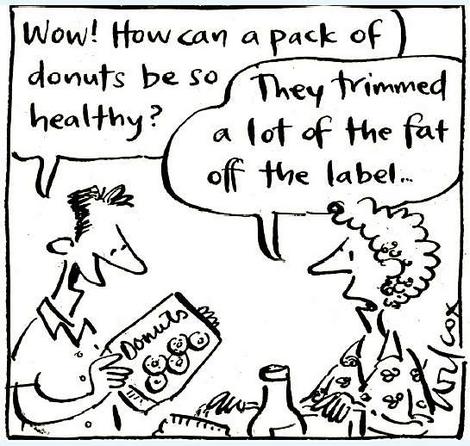
Food labelling: inadequate and deceptive

As far as Miss Eagle is concerned, one of the flaws of the inexact science of Economics is the supposition in the Theory of the Firm that the consumer has perfect choice. To Miss Eagle, it is a clear example that most theoretical economists are men who don't go shopping.
This is one consumer who is far from having perfect choice. Perhaps the buyers for retail firms come close to having perfect choice, but this consumer is dependent on making her choice from what retailers put on their shelves and when I am not able to get what I want, I know that the Theory of the Firm has failed to work once again. This is why I take labelling seriously. Miss Eagle is a label reader from way back. She also likes to have a bit of a handle on the companies - both retail and wholesale - who supply her food. Sometimes getting this information is not difficult or strenuous; sometimes it is nigh impossible. This is why Miss Eagle is most concerned about this week's news about labelling: inadequate and sometimes bordering on the deceptive. One thing that the consumer has to jack up on is the weasel words in our food promotion. Organic - can the consumer know or prove that this is a genuine claim. Should consumers be expected to pay a premium for organic food, particularly imported organic food from the USA that sits in cans and jars on the shelves of my supermarket. Natural - This is the word that drives Miss Eagle nuts. What does natural mean? The dictionary gives the following definition:
adjective 1 existing in or derived from nature; not made, caused by, or processed by humankind. 2 in accordance with nature; normal or to be expected: a natural death. 3 born with a particular skill or quality: a natural leader. 4 relaxed and unaffected. 5 (of a parent or child)related by blood. 6 archaic illegitimate. 7 Music (of a note) not sharpened or flattened.
Definition #1 seems to be the one to focus on in relation to food.
When advertising uses the word 'natural' what is the worth of the word. Miss Eagle suggests it has no value whatsoever. Everything we have on this planet has existed in or is derived from nature. Where else did it come from? Outer space? "Not made, caused by, or processed by humankind". Well, everything we have comes from God but how much comes to our table without being processed in some form by humankind? Most farmers use some type - organic or inorganic - of pesticide or herbicide. Then there are the industrial processes to which a lot of our food is subjected. There is human intervention at a variety of levels in our food chain, food processing, and food distribution. How can any marketer then use the word natural with honesty, clarity and exactitude?
Wholesome - How do we know? We don't know when the fruit and vegetables were picked. We seldom know where what we eat has come from, how far it has travelled, and how long it took to get to our table. What do we really know about nutrient content of our food when it gets to us? Can we take industrial processing of food for granted?
As consumers, we have allowed industrial methods of food processing and food distribution to enter our food production without much questioning. Basically, we like to purchase inexpensive food and we expect it to taste good, and we - at least in modern western industrial societies - expect the food to be available in the here and now, in season and out of season.
These factors are not the paramount ones we should be seeking when we are constructing a healthy and nutritious diet.
This is why labelling is so important: whether it is on fresh food or processed food; whether it is the unpackaged food purchased at a deli counter or the fresh food and vege purchased at farmers' and produce markets.
Consumers need to be savvy, demanding, and thoughtful of where their food comes from.
Take a look at food production in Australia. Be aware of how farmers are being squeezed by retail pricing and production costs and inputs. Be aware of how far agriculture and horticulture has retreated in this country and how we have allowed imports - even from the northern hemisphere - to invade our country and our food chain. And above all, let us all - producers and consumers - be aware of the ethics of food production and food consumption and the pressures both sides of the food chain place on humane standards. Why should animals suffer because of our demands for cheap, unseasonal, constant production?

ShareThis