Animals Australia: the voice for animals

Animals Australia: the voice for animals
Love life? Love all of life
Showing posts with label Organic food. Show all posts

Sunday, October 03, 2010

Locusts, sprays and bees: impacts on our food chain


In the last few days, I have posted here and here about the so-called locust plague and Eris O'Brien's viewpoint. The Stateline story is now up on their website.  You can look at it - and particularly note Eris O'Brien's thoughtful presentation - here.

My interest began with my friend Denis over at The Nature of Robertson who has done quite a number of posts on the locust situation which you will find by going here.  Denis's postings are quite extensive and explicit and I won't attempt to comment - but please read his posts.  They are important.
I do want to say that it is about time that we of the human species woke up to ourselves.  Who/what is the greatest threat to our wildlife, our food and water sources, our environment?  It is us.  Not the locusts.  Us.  We are a plague to our planet.  And we are not considering wiping ourselves out are we?  What we do have to do, though, is ask ourselves a few questions about what we are doing and what direction we are taking.  And we have to learn from the mistakes of our past.  And the most eloquent voice in all this was Rachel Carson.  Perhaps Carson was not the first.  However, in our times her voice has been the most significant, far-reaching and followed.

Australians, in particular, need to look at their own track record.  Point me in the right direction if I am wrong but I think we could take the cake for the biggest environmental vandals on the planet. We are up there with extinctions.  We are brilliant at land clearing.  We have a penchant for importing animals which become feral: the rabbit, the fox, the cane toad, etc.  They are the highly visible ones.  Go here for more information on our toxic importations.  Australians' use of pesticides, particularly in our food chain, continues with only limited abatement.  You might like to have a look at the article below.

Over at The Nature of Robertson, Denis asks:
I have a view about this which might not be popular, but if the Victorian Government told their electors that they were going to spray vast areas of the State with many different chemicals, nearly all of which are highly toxic to bees - what would the reaction be?
Finally, I would like to draw your attention to the bee.
The blue-banded native bee with a tomato blossom
Much is made of the European honey bee and the fact that Australia is now the only country in which there is a wild population. In fact, did you know that European honeybees collect 90% of available nectar and pollen but pollinate only about 5% of our plants?  In short, European honeybees are bludgers, free-loaders.  They can take their food without doing anything useful in return - like pollination.  The really hard yakka in the bee world in Australia is done by our very own native bees.
One of the things we might all consider is our gardens and how our small urban and suburban patches can make a positive contribution to Australia's ecology. Here I would like to put in a word for that great native bee attractor, the Native Frangipani.

When I lived in tropical North Queensland in the shadow of the World Heritage listed rainforest, I grew a beautiful specimen.  My neighbours were busy planting foreign palm species - and had to ask what my huge and beautiful (yes, it did get to be huge) tree was.  I believe it can be grown in quite diverse regions - besides the tropics.  Its beautiful, tiny, fragrant blossom attract those little black native bees well - like bees to a honeypot.  

I would ask that you have one more look at the Stateline program.  Look and listen and analyse what is being told to you in images and words in this locust segment.  It begins with Victoria's premier, John Brumby.  He doesn't say much - but it is clear that his presence gives this segment his imprimatur and adds to its stature.  Because of Brumby's presence, this gives status and stature to the locust story.  But how detailed is the information provided by the proponents of spraying?  I would say insufficiently detailed.  Insufficiently describing and circumscribing safety.  This contrasts with the detailed argument put forward by Eris O'Brien.
Related reading:
Australian Bee Lore and Bee Culture: Including the Influence of Bees on Crops and the Colour of Flowers and Its Influence on Bee Life [ 1912 ]
Commercial honey bees (Apis mellifera) reduce the fecundity of an Australian native bee (Hylaeus alcyoneus) [An article from: Biological Conservation]

Further reading:

Photobucket

Saturday, October 02, 2010

Victoria, the food chain, & the coming chemical kill-off of locusts....wildlife & other insects

Eris O'Brien

Further to my post below on Eris O'Brien and the locusts, Eris was part of a segment on the locusts on Victoria's Stateline to-night. Eris uses the term locust migration instead of locust plague.  He also speaks of other options.  He spoke of the experience of long-ago farmers in the Wimmera district who used repellent methods other than chemicals to deal with the periodic extremes of numbers of locusts.

I find amazing some omissions from the public information.


Firstly, we are not told exactly how organic farmers - agricultural and horticultural - are managing or what their views are.  Organic food production is on the rise.  There is an increasing demand for it from consumers.  I would like to know what organic food producers are planning to do in their part of the food cycle.  It is said there is not ready availability of organically suitable pesticides.  Is this correct?  Will these types of insecticides be in widespread or limited use?  What assurances do we have to their safety both for humans, for wildlife and beneficial insects?

Secondly, I have not heard from any food activists (ones that you hear from in regard to genetic modification of food or in  discussion about ethical consumerism) of their views on the chemicals about to enter our food chain.


Nitrothion 1000 appears to be the chemical of choice for killing the locusts and I have above published a document which can be downloaded in this regard. Go here to follow up on a document relating to Nitrothion and locusts. On Statewide, all sorts of assurances were given:  there will be buffer zones; no spraying near waterways, beehive sites, and environmentally sensitive areas - so we are told. The manner of conveying this information was brief and offhand.


Where Eris O'Brien is clear and detailed in explaining the situation from his viewpoint, the proponents and deliverers of death by insecticide to locusts and, I believe, other wildlife were not trying to convince anyone really.


Their words were placed - as far as I could assess - as an afterthought and merely as a matter of form.


There was little or no attempt to explain, convince and assure.  And the whole Stateline segment appeared to have the imprimatur of John Brumby, Premier of Victoria, who participated in the beginning of the segment.  He did the reassuring with a well spoken version of  "she'll be right - we have the sprays" attitude.


The only one who put forward a point of view based on reason, experience, and science was Eris O'Brien.  He was convincing.  A pity the dominant view couldn't be bothered.  The dominant view clearly doesn't believe it has to convince anyone - and that everyone will just fall in behind their point of view and their execution of what is required to do a chemical kill-off of the locusts.  I would advise them to think again. I for one am not convinced.


I am new to Eris O'Brien's arguments - and, at the moment, I find his argument convincing.  Most convincing indeed!

Photobucket

Monday, September 08, 2008

My personal jury has long been out with regard to organic food. Not that I have anything against it - but the price. I can't afford to source all my food organically - although I give it a try with The Trad Pad garden, free range eggs, my fair trade coffee, and - most recently - fresh milk. And, though I am vegetarian, I purchase the occasional free range chicken for the family. Who can afford organic food from the supermarket or 'boutique' organic store? Certainly not a low to middling income family with a number of hungry mouths to feed.
Having said that though, one has to take into account our food and how it is distributed. Most consumers would see Coles and Woolworths - our major Australian duopoly - as supermarkets. But in this day and age they should be seen not merely as retailers but as major distributors and key players in the supply chain of our food from farm to family. If this, dear Reader, has not already crossed your mind then you really need to pop over here for the real story.
So when one understand the demands of the modern retailer/distributor and the modern consumer, there is a lot than happens betwen paddock and plate. The key word here is consistency - in quality and supply. But there is another horrible word that comes into things and that's the squeeze - of market dominance of the duopoly over suppliers.
Adventurous souls have developed organic agriculture and Biological Farmers of Australia (BFA) is a major organization in this regard. BFA also has a small producers program under the auspices of the Organic Growers of Australia. Certification is the watchword of both organizations.
The reason for this explanation is that to counter my problem - price - there needs to be consistency in quality and supply backed up by certification - a sort of quality guarantee - to get into the big distribution chains where price will start to become competitive and make a difference to consumer decisions - my decisions. I am already headed that way because sustainable farming of organic food is the only way to go for the health of our land and the health of our selves and our families. As they say, good food is the best medicine and we are what we eat.
The Australian Organic Market Report (AOMR) is now out. A copy of the executive summary can be downloaded via aomr_2008_exec1[1].pdf. The report was independently researched by the University of New England’s Organic Research Group, and commissioned by BFA. It is based on industry-wide survey data and builds upon research published by the Federal Department of Agriculture, Fisheries and Forestry (DAFF) in 2004. And it is good, good news.
There is an 80%+ growth in organic farm gate sales since 2004. The BFA's members must be doing something right because this growth comes in the midst of the most severe drought since Europeans settled this country in the late 18th century.
Here are some of the reports findings:
  • Retail value (incorporating imports and adjusting for exports) was estimated for the first time above $0.5B. Retail value reached $578,000,000 with reports of between 10 and 30%+ growth per annum for some sectors since the last report in 2004. (See the AOMR for specific sector values)
  • 2007 farm gate values were estimated to be in excess of $231,000,000 – an 80% increase on the 2004 DAFF research findings.
  • With 11,988,044 hectares, Australia accounts for the largest amount of certified organic farmland in the world, the majority of which is used for extensive grazing.
  • Major retailers now carry in excess of 500 different organic lines in fresh and grocery categories.
  • The number of certified organic operators has increased by an annual 5.2% average net over the last 5 years, during a time of ongoing decrease in overall farmer numbers in Australia.
  • In 2007 the total number of certified organic operators was 2750 – made up of farmers, processors and marketers. Almost three quarters of all operators are producers, representing 1.5 - 1.8% of all growers in Australia.
  • The average age of an organic producer in Australia is lower than a non-organic producer.
  • The organic industry is consolidating and the average size of organic farms has increased, highlighting a trend towards professional farming at a larger scale, and farm area expansion by operators experiencing long-term success in utilising organic systems.
  • Horticulture remains a major stay of the industry. Some two thirds of organic farmers make up this sector which represents almost half of the total organic farm gate value in Australia.
  • Fresh produce remains the primary ‘point of entry’ for new organic consumers.
  • Despite widespread drought, farm gate sales have risen by over 80% as an average across all sectors since last reported in 2004. Grains and broadacre livestock were most impacted by drought, effectively decreasing the reported average for industry overall.
  • 40% of consumers now buy organic food at least on occasion.

So the end result of this means that there is increasing consumer demand for organic products, supply issues are being addressed, and there is every likelihood of achieving competitive price mechanisms which will be attractive to consumers. In other words, it looks like more people will find organic produce more accessible and more affordable. This is great news

Sunday, November 26, 2006

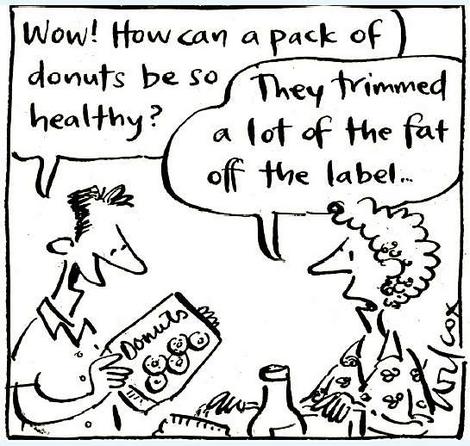
Food labelling: inadequate and deceptive

As far as Miss Eagle is concerned, one of the flaws of the inexact science of Economics is the supposition in the Theory of the Firm that the consumer has perfect choice. To Miss Eagle, it is a clear example that most theoretical economists are men who don't go shopping.
This is one consumer who is far from having perfect choice. Perhaps the buyers for retail firms come close to having perfect choice, but this consumer is dependent on making her choice from what retailers put on their shelves and when I am not able to get what I want, I know that the Theory of the Firm has failed to work once again. This is why I take labelling seriously. Miss Eagle is a label reader from way back. She also likes to have a bit of a handle on the companies - both retail and wholesale - who supply her food. Sometimes getting this information is not difficult or strenuous; sometimes it is nigh impossible. This is why Miss Eagle is most concerned about this week's news about labelling: inadequate and sometimes bordering on the deceptive. One thing that the consumer has to jack up on is the weasel words in our food promotion. Organic - can the consumer know or prove that this is a genuine claim. Should consumers be expected to pay a premium for organic food, particularly imported organic food from the USA that sits in cans and jars on the shelves of my supermarket. Natural - This is the word that drives Miss Eagle nuts. What does natural mean? The dictionary gives the following definition:
adjective 1 existing in or derived from nature; not made, caused by, or processed by humankind. 2 in accordance with nature; normal or to be expected: a natural death. 3 born with a particular skill or quality: a natural leader. 4 relaxed and unaffected. 5 (of a parent or child)related by blood. 6 archaic illegitimate. 7 Music (of a note) not sharpened or flattened.
Definition #1 seems to be the one to focus on in relation to food.
When advertising uses the word 'natural' what is the worth of the word. Miss Eagle suggests it has no value whatsoever. Everything we have on this planet has existed in or is derived from nature. Where else did it come from? Outer space? "Not made, caused by, or processed by humankind". Well, everything we have comes from God but how much comes to our table without being processed in some form by humankind? Most farmers use some type - organic or inorganic - of pesticide or herbicide. Then there are the industrial processes to which a lot of our food is subjected. There is human intervention at a variety of levels in our food chain, food processing, and food distribution. How can any marketer then use the word natural with honesty, clarity and exactitude?
Wholesome - How do we know? We don't know when the fruit and vegetables were picked. We seldom know where what we eat has come from, how far it has travelled, and how long it took to get to our table. What do we really know about nutrient content of our food when it gets to us? Can we take industrial processing of food for granted?
As consumers, we have allowed industrial methods of food processing and food distribution to enter our food production without much questioning. Basically, we like to purchase inexpensive food and we expect it to taste good, and we - at least in modern western industrial societies - expect the food to be available in the here and now, in season and out of season.
These factors are not the paramount ones we should be seeking when we are constructing a healthy and nutritious diet.
This is why labelling is so important: whether it is on fresh food or processed food; whether it is the unpackaged food purchased at a deli counter or the fresh food and vege purchased at farmers' and produce markets.
Consumers need to be savvy, demanding, and thoughtful of where their food comes from.
Take a look at food production in Australia. Be aware of how farmers are being squeezed by retail pricing and production costs and inputs. Be aware of how far agriculture and horticulture has retreated in this country and how we have allowed imports - even from the northern hemisphere - to invade our country and our food chain. And above all, let us all - producers and consumers - be aware of the ethics of food production and food consumption and the pressures both sides of the food chain place on humane standards. Why should animals suffer because of our demands for cheap, unseasonal, constant production?

ShareThis