Animals Australia: the voice for animals

Animals Australia: the voice for animals
Love life? Love all of life
Showing posts with label Consumers and consumption. Show all posts

Friday, April 26, 2013

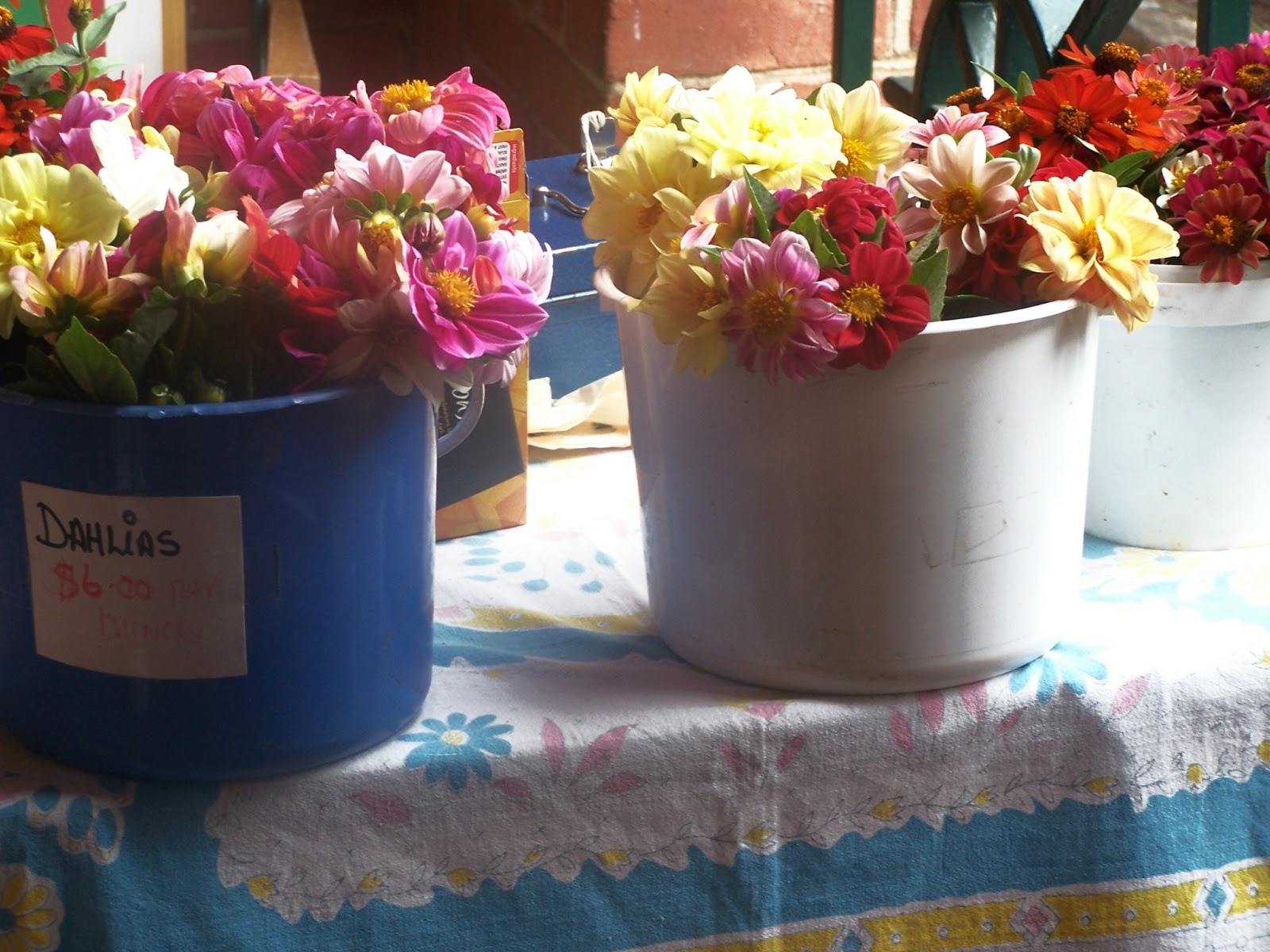
This week-ends markets in Victoria - 2013-04-27 and 2013-04-28


Fourth Saturday-Sunday Markets

4th Saturday
WhereWhenEntryNotes
Ballarat LakesideWindmill Drive, Lake Wendouree, Ballarat9am-1pmfree2nd and 4th Saturdays, except December - 2nd Saturday only
BentleighEast Bentleigh Primary School, 90 Bignell Road, East Bentleigh8am-12.30pm$2 entry4th saturday excl. January; 
Casey-BerwickThe Old Cheese Factory, 34 Homestead Road, Berwick8am-12.30pm
Dec 20th from 4pm to 8pm
Churchill IslandChurchill Island, Phillip Island8am-1pm
Every Saturday during January - 8th, 15, 22, 29
Hume MurrayGateway Village, Lincoln Clauseway, Wodonga8am-12pm
Every 2nd Saturday from Jan 8th
Keilor EastCentreway Park, Wyong Street8am-1pm
Starts: November 24th
LancefieldCentre Plantation, High Street, Lancefield9am-1pm
3rd Saturday in December
MansfieldMansfield Primary School, Bottom Terrace. Entrance off Highette Street, Mansfield8.30am-1pm
No Market in January
MontyMontmorency Primary School 60A Rattray Road, Montmorency9am-1pmgold coinentry proceeds go to Primary School
MyrtlefordSt Paul's Anglican Church, Clyde Street, Myrtleford8am-12pm
Each Saturday - January to May; 1st/3rd Saturday - June to December
NewtownCnr Shannon Avenue and West Fyans Street Newtown Geelong8am-1pm

PrestonBell Primary School
Corner Scotia St and Oakover Rd, Preston
9am-1pm
$2

children free
Slow FoodAbbotsford Convent, St Heliers Road, Abbotsford8am-1pm$2Parking:$2
Taste of Gold - MonashMonash University Clayton Campus Car Park8.30am-1pm
moved from Holmesglen TAFE; no market January
TraralgonKay Street Gardens, Kay Street, Traralgon8am-1pm

TorquayTorquay Central, Bristol Road, Tourquay8.30am-1pm
every saturday
YarravilleYarraville Gardens, Cnr Hyde and Sommerville Roads, Yarraville8am-12pm


4th Sunday
Where
WhenEntry
Notes
Fitzroy-St KildaCorner Fitzroy St & Lakeside Drive8am-1pm

Flemington (ex Melb Showgrounds)Debney Park Secondary College,
169 Mt Alexander Road, Flemington
9am-1pm
Every Sunday; restarts 9th January 2011; Parking $3
KinglakeIn the Shed, cnr Heidelberg/Kinglake Road and Healesvill/Kinglake Road9am-2pm
Ex Yarra Glen Railway Market
ManninghamThe Manningham Club
1 Thompsons Rd, Bulleen
8am-1pm
gold coin donation
Mt. ElizaCnr Mt Eliza Way and Canadian Bay Road, Mount Eliza9am-1pm
No market in December
MulgraveGrounds of the Body Shop, Cnr Jacksons & Wellington Rds Mulgrave8am-1pm
Every Sunday;
YarrawongaPiper Street, Yarrawonga8.30am-12.30pm

Monday, July 19, 2010

Ethics of Eating Meet Up - Melbourne Writers Festival : Friday 29 August 2010


Good Morning, Tucker Lovers,

I am inviting you to a Meet Up.  The Melbourne Writers Festival starts next month and I thought if any one is interested we could have a Meet Up at one of the programmed events and do coffee somewhere nice afterwards.  What do you thinK?  Interested?  The event I am suggesting is food relevant and, I am sure, will be of great interest.

THE ETHICS OF EATING
 60 MINS
What does it mean to eat ethically?
Should we eat locally grown, in season,
GM/chemically free produce,
sold at the local farmer's market?
What is the place of the industrial food complex?
Join gourmet farmer, Matthew Evans
food sociologist, Gyorgy Scrinis
and journalist Margaret Simons to find out.

WHEN
Friday August 27
1pm

WHERE
ACMI Cinema 2

AFTERWARDS
This is to be advised
Please forward suggestions

There is a cost for this event plus you will need some money for refreshments at a restaurant afterwards.  To purchase tickets for the event - and you should do this soon since some MWF events are already sold out - please follow this link.  Cost for early birds  is $18 full and $16.50 concession.  If you are a lucky one with a pass, you will have to book but you will enter your pass number.  When you have done all that, could you please advise me that you are coming by emailing me at misseaglesnetwork(at)gmail(dot)com.  If you have a food blog, please let me know just in case I haven't discovered you yet. 

Related reading:
The Real Food Companion 


Food, Morals and Meaning: The Pleasure and Anxiety of Eating, Second Edition


Eating 


Photobucket

Monday, June 28, 2010

Interrogate your purchases : ask where they come from

BUY, BUY AMERICAN PIE

A long, long time ago
we used to get our food home grown
and toothpaste used to make you smile

It used to be you'd shop with ease
never eating antifreeze
You'd plan to keep on living quite awhile

But now our goods are all delivered
from somewhere on the Yangtze River
No none knows the source there
so you might find some horse hair

But if corporations make a buck
they don't give a flying... Peking duck
And with this system we get stuck
today it makes you sigh

Now when you buy, buy an American pie
your grandma didn't bake it
it was made in Shanghai
where they engineered the apples to be juicy not dry

But the crust is made of cardboard and lye
don't feed it to your dog
he might die

Now did you eat a Tasty Cake
and did it make your stomach ache?
I could have said "I told you so"

And the reason you are looking wan
is some guy took bribes in Sichuan
so you just bit into little Debbie's toe

And now the toys you bought from Fisher Price
have toxins deemed unsafe for mice
and Elmo tends to wheeze
cus he's laced with PCBs

But of all my problems seen so far
when I see my cheap new DVR
I'll even brush my teeth with tar

And you will see that I'll
buy, buy from some young guy
I drive a Chevy and it's heavy
but the price is too high

Soon twenty bucks will buy a car from Shanghai
and honey that'll be the day we all die

~ written & performed by the Capitol Steps


From here

~~~~~~~~~
Related reading:

Food Security for the Faint of Heart
Gardening For the Faint of Heart

Further reading:


Photobucket

Sunday, July 19, 2009

Ethical & sustainable shopping for books, clothes and household

In the interests of ethical and sustainable shopping, I have to-day placed on the sidebar click-through pictures for these two sites. Brotherhood Books is an online outlet of the Brotherhood of St Laurence here in Melbourne. A wide range of second-hand books at reasonable prices is available. Have a browse! Op shopping is an art - particularly in Melbourne. And with I Op Therefore I Am we have a tool to assist us in practising the art: reviews of Op Shops across Melbourne and you can get lists of Op Shops with opening hours and addresses.
Happy Shopping... Ethically and Sustainably!

Wednesday, March 05, 2008

Tony Burke, we know more than you think about food

Dear Reader, I don't think they get it yet. I don't think the Prime Minister gets it. I don't think the farmers and their organisations get it. And it has become patently obvious that the Minister for Agriculture, Fisheries and Food, Tony Burke, certainly doesn't get it.
What don't they get? They do not understand, do not comprehend the interest ordinary, everyday Australians are taking in their food - its nutrition value, the way it is grown, who are the people who grow it, the impact of climate change upon it, and the impact of major domestic and international corporations on it.
It seems to me that the Australian government sees only major corporate entities: the farmers, their organisations; food distributors and manufacturers and their organisations; agribusiness and its organisations. Then their is that strange entity called "the consumer".
Now "the consumer" does not hold weighty conferences attended by all those listed in the previous paragraph plus agricultural researchers and economists. But, last time I looked, the consumer still had a brain, was still a sentient being, and is capable of making reasonable and clear decisions.
We see farmers organisations and their supporters drumming up the so-called "city/country divide". What is not recognised is the large numbers of Australians - who qualify only for the title of consumer - who have moved to the country to establish their own small holdings; who have built relationships with farmers - particularly through Farmers Markets; who are concerned with ethical eating and who are so supportive of the agricultural enterprise that they support drought appeals and angst together with rural residents over the mental health of the farming community.
Australia, with its mild climate across most of the continent, has always been home to keen growers of edible gardens. And most of these gardeners are trying to be organic. Many of them are keen students of permaculture and biodynamics. Lots of them could imagine puttingMonsanto and Dupont on trial for agricultural and economic terrorism but instead support seed savers groups and heritage varieties of fruits and vegetables. They are learning not to damage Australia's fragile soils with excessive tilling and their no-dig gardens are multiplying day by day. Primary Schools are teaching children about food from seed to souffle in their own kitchens and kitchen gardens - often aided and abetted by celebrity chefs.
The Minister seems to be entirely ignorant of this movement that votes with its green and dirty thumbs. Why else would he have come out with these statements? (Please take time to read the comments!) ABARE Outlook 2008 has been on in Canberra. The Minister made his views clear in a doorstop interview there:
REPORTER:
[Inaudible] campaigns against food miles, etc. Are you going to invest in advertising or is this something that you’re making comment about?
BURKE: Certainly, with respect to the animal welfare campaigns, there’s been ongoing investment – and I referred to some of it today – in trying to make sure that we are not just at world’s best practice, but leading world’s best practice in overseas abattoirs and the destination points of some of our live exports.
With respect to food miles, I think we have to take, as I’ve said today, every opportunity to let people know and to let the consumers, both in Australia and internationally know – and I took the advantage today when we had international press here – to make it clear that food miles is a system deliberately designed to deceive. It does not provide quality consumer information and preys on the fact that a lot of consumers – and good on them – want to make sure that they’re doing their bit in trying to reduce carbon emissions.
The problem with food miles is that it takes one tiny [inaudible] of an equation and that’s their entire answer.
So clearly the Minister has a limited understanding of the concept of "food miles": of being near enough to your food to shake hands with the farmer; of caring about freshness and nutrition and value-for-money goodness; and of cruelty free animal lives.
Miss Eagle's solution to these sort of things is - organise. After all, that is what the major corporations and their hangers-on have done. But Miss Eagle looks around and sees organisation: the organisations devoted to permaculture and biodynamics and organics; the increase in retail outlets distributing these types of food products; the countless books, blogs, journals and websites promoting the good, simple, healthy and sustainable life.
Such a mind-set takes one beyond the suburban picket fence mentality and the four walls of a boxy apartment. It takes one into a wider world where nature is valued, treasured, and studied with a view to greater understanding.
Perhaps one day this understanding will reach as far as the board table in the Cabinet Room of Federal Parliament (who will water a Prime Minister's and Minister's edible garden?) and find a forum at ABARE.
The Hon Tony Burke MP Minister for Agriculture, Fisheries and Forestry.
PO Box 6022
House of Representatives
Parliament House
Canberra ACT 2600
Tel: (02) 6277 7520 Fax: (02) 6273 4120

Sunday, November 26, 2006

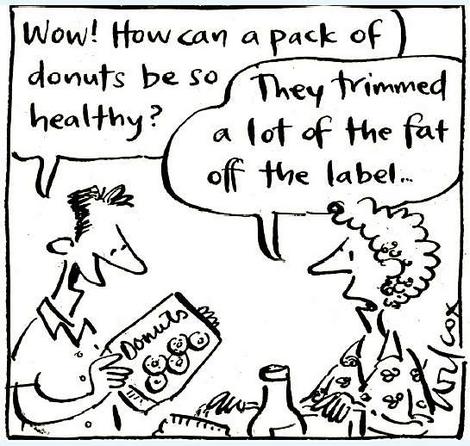
Food labelling: inadequate and deceptive

As far as Miss Eagle is concerned, one of the flaws of the inexact science of Economics is the supposition in the Theory of the Firm that the consumer has perfect choice. To Miss Eagle, it is a clear example that most theoretical economists are men who don't go shopping.
This is one consumer who is far from having perfect choice. Perhaps the buyers for retail firms come close to having perfect choice, but this consumer is dependent on making her choice from what retailers put on their shelves and when I am not able to get what I want, I know that the Theory of the Firm has failed to work once again. This is why I take labelling seriously. Miss Eagle is a label reader from way back. She also likes to have a bit of a handle on the companies - both retail and wholesale - who supply her food. Sometimes getting this information is not difficult or strenuous; sometimes it is nigh impossible. This is why Miss Eagle is most concerned about this week's news about labelling: inadequate and sometimes bordering on the deceptive. One thing that the consumer has to jack up on is the weasel words in our food promotion. Organic - can the consumer know or prove that this is a genuine claim. Should consumers be expected to pay a premium for organic food, particularly imported organic food from the USA that sits in cans and jars on the shelves of my supermarket. Natural - This is the word that drives Miss Eagle nuts. What does natural mean? The dictionary gives the following definition:
adjective 1 existing in or derived from nature; not made, caused by, or processed by humankind. 2 in accordance with nature; normal or to be expected: a natural death. 3 born with a particular skill or quality: a natural leader. 4 relaxed and unaffected. 5 (of a parent or child)related by blood. 6 archaic illegitimate. 7 Music (of a note) not sharpened or flattened.
Definition #1 seems to be the one to focus on in relation to food.
When advertising uses the word 'natural' what is the worth of the word. Miss Eagle suggests it has no value whatsoever. Everything we have on this planet has existed in or is derived from nature. Where else did it come from? Outer space? "Not made, caused by, or processed by humankind". Well, everything we have comes from God but how much comes to our table without being processed in some form by humankind? Most farmers use some type - organic or inorganic - of pesticide or herbicide. Then there are the industrial processes to which a lot of our food is subjected. There is human intervention at a variety of levels in our food chain, food processing, and food distribution. How can any marketer then use the word natural with honesty, clarity and exactitude?
Wholesome - How do we know? We don't know when the fruit and vegetables were picked. We seldom know where what we eat has come from, how far it has travelled, and how long it took to get to our table. What do we really know about nutrient content of our food when it gets to us? Can we take industrial processing of food for granted?
As consumers, we have allowed industrial methods of food processing and food distribution to enter our food production without much questioning. Basically, we like to purchase inexpensive food and we expect it to taste good, and we - at least in modern western industrial societies - expect the food to be available in the here and now, in season and out of season.
These factors are not the paramount ones we should be seeking when we are constructing a healthy and nutritious diet.
This is why labelling is so important: whether it is on fresh food or processed food; whether it is the unpackaged food purchased at a deli counter or the fresh food and vege purchased at farmers' and produce markets.
Consumers need to be savvy, demanding, and thoughtful of where their food comes from.
Take a look at food production in Australia. Be aware of how farmers are being squeezed by retail pricing and production costs and inputs. Be aware of how far agriculture and horticulture has retreated in this country and how we have allowed imports - even from the northern hemisphere - to invade our country and our food chain. And above all, let us all - producers and consumers - be aware of the ethics of food production and food consumption and the pressures both sides of the food chain place on humane standards. Why should animals suffer because of our demands for cheap, unseasonal, constant production?

ShareThis