As far as Miss Eagle is concerned, one of the flaws of the inexact science of Economics is the supposition in the Theory of the Firm that the consumer has perfect choice. To Miss Eagle, it is a clear example that most theoretical economists are men who don't go shopping.
This is one consumer who is far from having perfect choice. Perhaps the buyers for retail firms come close to having perfect choice, but this consumer is dependent on making her choice from what retailers put on their shelves and when I am not able to get what I want, I know that the Theory of the Firm has failed to work once again.
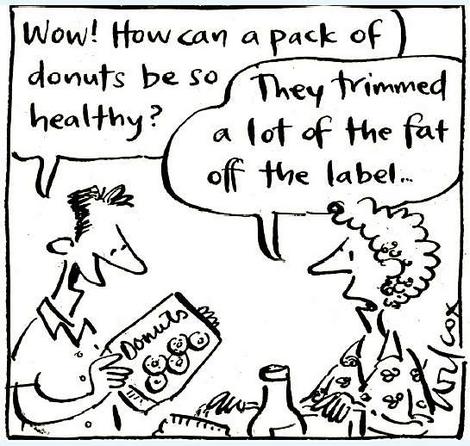
This is why I take labelling seriously. Miss Eagle is a label reader from way back. She also likes to have a bit of a handle on the companies - both retail and wholesale - who supply her food. Sometimes getting this information is not difficult or strenuous; sometimes it is nigh impossible. This is why Miss Eagle is most concerned about this week's news about labelling:
inadequate and
sometimes bordering on the deceptive.
One thing that the consumer has to jack up on is the weasel words in our food promotion.
Organic - can the consumer know or prove that this is a genuine claim. Should consumers be expected to pay a premium for organic food, particularly imported organic food from the USA that sits in cans and jars on the shelves of my supermarket.
Natural - This is the word that drives Miss Eagle nuts. What does natural mean? The
dictionary gives the following definition:
adjective 1 existing in or derived from nature; not made, caused by, or processed by humankind. 2 in accordance with nature; normal or to be expected: a natural death. 3 born with a particular skill or quality: a natural leader. 4 relaxed and unaffected. 5 (of a parent or child)related by blood. 6 archaic illegitimate. 7 Music (of a note) not sharpened or flattened.
Definition #1 seems to be the one to focus on in relation to food.
When advertising uses the word 'natural' what is the worth of the word. Miss Eagle suggests it has no value whatsoever. Everything we have on this planet has existed in or is derived from nature. Where else did it come from? Outer space? "Not made, caused by, or processed by humankind". Well, everything we have comes from God but how much comes to our table without being processed in some form by humankind? Most farmers use some type - organic or inorganic - of pesticide or herbicide. Then there are the industrial processes to which a lot of our food is subjected. There is human intervention at a variety of levels in our food chain, food processing, and food distribution. How can any marketer then use the word natural with honesty, clarity and exactitude?
Wholesome - How do we know? We don't know when the fruit and vegetables were picked. We seldom know where what we eat has come from, how far it has travelled, and how long it took to get to our table. What do we really know about nutrient content of our food when it gets to us? Can we take industrial processing of food for granted?
As consumers, we have allowed industrial methods of food processing and food distribution to enter our food production without much questioning. Basically, we like to purchase inexpensive food and we expect it to taste good, and we - at least in modern western industrial societies - expect the food to be available in the here and now, in season and out of season.
These factors are not the paramount ones we should be seeking when we are constructing a healthy and nutritious diet.
This is why labelling is so important: whether it is on fresh food or processed food; whether it is the unpackaged food purchased at a deli counter or the fresh food and vege purchased at farmers' and produce markets.
Consumers need to be savvy, demanding, and thoughtful of where their food comes from.
Take a look at food production in Australia. Be aware of how farmers are being squeezed by retail pricing and production costs and inputs. Be aware of how far agriculture and horticulture has retreated in this country and how we have allowed imports - even from the northern hemisphere - to invade our country and our food chain. And above all, let us all - producers and consumers - be aware of the ethics of food production and food consumption and the pressures both sides of the food chain place on humane standards. Why should animals suffer because of our demands for cheap, unseasonal, constant production?