- Where - Westgarth Books, 77 High Street, Northcote
- When - 12-1 pm, Saturday, October 15, 2011
- Phone - 9482 7117
Wednesday, October 05, 2011
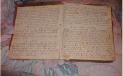
Oz history in food: Australian Family Recipes 1868 to 1950
Monday, August 06, 2007
Touring the suburbs of my life
These are oven mitts which will withstand temperatures of 300 degrees Celsius. I look forward to a burn free future and being able to withdraw hot, heavy baking dishes with much greater dexterity and confidence than previously. Thank you, dear Director.Monday, July 16, 2007
The salt of the earth
Some people like to tell us that salt is a white poison. They tell us of its effect on blood pressure. They tell us of the advantages of eliminating salt from our diet. But Miss Eagle has not parted with her salt cellar yet. It contains iodised salt, of course.
Tess over at Anchors and Masts brought much to mind when she did this beautiful post on salt.
You see, dear Reader, Miss Eagle grew up in Bowen at the northern end of the beautiful Whitsundays where Baz Luhrmann has been filming his latest movie, Australia, starring Nicole Kidman and Hugh Jackman. When Miss E left school at the ripe old age of 15, her first job was as a clerk-typist at the Bowen Salt Co., the reference for the mural above.
The Bowen Salt Works is one of the first sights that tourists see when they enter Bowen. Great paddocks of sea water baking in the sun evaporating slowly into salt. In the Christian tradition, disciples are referred to by Jesus as the salt of the earth. He said that if the salt loses its taste, it very saltiness, how can it ever be restored and how shall food be salted.
In a speedily changing world, Miss E wonders if a lot of saltiness has been lost, leaving us with parts of modern life which are completely vapid, tasteless.
Monday, June 11, 2007
Apple Rhubarb Pie
Rhubarb is around and Miss Eagle decided to indulge in a memory from childhood of my mother's friend, Delia Brazil, and her rhubarb and apple pie.
Miss E used Flaky Pastry for the pie case, made from scratch. Miss E is fussy. She doesn't object to store-bought Filo or Puff Pastry. These really are time consuming, take practice to get right easily, and - in these days of small kitchens - space could be an issue. For Miss E, you need a good excuse to purchase frozen Shortcrust Pastry. In these days of dough hooks for the mixer and the wonders of food processors, there really is little excuse for not making your own.
Now Miss Eagle wishes to advise that between shortcrust and puff pastry there is another category: that of Flaky Pastry, sometimes known as Rough Puff Pastry. Now you would not dash home from work and rustle up this pastry for the evening meal as you could with shortcrust. However, you can make it ahead of time and keep it in the frig for later use. And certainly, it is a pastry worth making for special occasions and special guests. The recipe and instructions here are from our beloved Miss Schauer - she of The Schauer Australian Cookery Book.
First, we will look at Miss S's instructions.
- PUFF, FLAKY OR ROUGH PASTES are folded and rolled repeatedly to increase the amount of cold air held between the layers. Puff paste must be rolled in short forward rolls, never backwards and forwards. The rolling pin must be lifted between rolls. Puff pastry must never be rolled over the edge as this may force out some of the cold air. The ends and edges must be secured by being turned over a little and pressed heavily with a rolling pin.
- Puff pastry is allowed to stand between rollings, in an ice-chest, refrigerator, or cold place, covered with a buttered paper to prevent crust forming. [Miss E doesn't use buttered paper. She puts it in the frig in a plastic bag.] This is done in order that the butter may harden and thus keep layers of paste and butter separate.
- In warm weather, puff pastry, when rolling should be placed on a marble or cold slab cooled by ice or very cold water, i.e. wash over and dry before using.
Then to Miss Schauer's recipe:
- Divide the pastry into two parts: one piece 1/3 in size (top); the second piece 2/3 in size (bottom) and line pie dish. [Please note: Miss E's pie dish measures 25.5cm in diameter and 5cm deep. To ensure sufficient pastry, Ms E used 10z flour with other ingredients modified accordingly.]
- Peel, quarter and slice 3 Granny Smith apples and spread one of these apples neatly on the pastry around the base of the pie dish. Top and tail rhubarb and chop stems into pieces about an inch long. Place these on top of the apples. Then spread remaining two applies sliced on top of the rhubarb.
- Sprinkle the fruit thoroughly with brown sugar.
- Sprinkle with lemon juice - use sufficient to flavour fruit not to soak the pastry base.
- Place 6 cloves evenly around the pie.
- Cover with pastry lid.
- Trim pastry and use left overs for pastry decoration
- Glaze. Miss E uses milk.
- Bake in a very moderate oven - approximately 175 degrees Celsius. The pie should take 30 to 40mins to bake to ensure the fruit is cooked through.
- Cool and served with custard. Miss E's was made with No Egg according to the recipe on the packet.
- Miss Eagle used PureHarvest Organic Nature's Soy as an alternative to milk. Miss E buys this by the slab at Friends of the Earth in Fitzroy; Woolworths Naytura Soya Margarine Spread; and Orgran Gluten Free No Egg Natural Egg Replacer from Maxi.
~~~~~~~~~~~~~~~~~
Sunday, June 10, 2007
Teacake Australis: #2
When Miss Eagle discussed teacakes here, Val sent me her recipe which she, in turn, got from the lovely Kali. Miss E can highly commend it. It is a little different in that one separates the white of the egg from the yolk and whips the white. The sagacious Miss Schauer has only one tea came in which yolk and white is separated. She calls it a Special Teacake. Miss E will give recipes for both. Miss E baked the cake in a 20cm(8") springform pan. The pan specified for Val and Kali's recipe was smaller - 18cm (7"). There was one deviation from the recipe. Miss E had in the pantry a blend from the McCormick range of Orange, Cardamom and Vanilla so she sprinkled this over the cinnamon/nutmeg teacake. It was lovely - providing a lovely contrast to the cinnamon and nutmeg in the cake.
Ingredients
- 1 cup self-raising flour
- 1/2 teaspoon cinnamon
- 1/4 teaspoon nutmeg
- 1 egg, separated
- 1/2 cup sugar
- 1/2 cup milk
- vanilla essence (about a capful)
- 1 ½ tablespoons butter, melted
- extra melted butter
- 1 teaspoon cinnamon
- 1 tablespoon sugar
Method
Sift the flour with the 1/2 teaspoon of cinnamon and the nutmeg. Beat the egg white until stiff. Add the egg yolk and mix in. Gradually beat in the 1/2 cup of sugar. Slowly stir in the milk and vanilla essence. Stir in the sifted dry ingredients, with the melted butter.
Spoon into a greased 18cm (7 in) round sandwich tin and bake in a moderate oven for 30 minutes. While still hot, brush the top with extra melted butter and sprinkle with the teaspoon of cinnamon mixed with the tablespoon of sugar. Serve warm or cold, with butter.
Separate yolks from whites of 2 eggs. Beat egg whites stiffly, add a pinch of salt, beat in the egg yolks, beating for about 5 minutes. Then slowly add 1/2 cup sugar and beat till dissolved. Add slowly 1/2 cup of milk. Sieve in a cup of self-raising flour. Add 1 tablespoon of melted margarine. Pour into a greased 8 in. sandwich tin. Bake in a moderate oven 25 to 30 minutes. While hot, spread with a little butter sprinkled with brown sugar and cinnamon.
Tuesday, June 05, 2007
Teacake Australis: #1
Teacakes are a genre all their own with many subspecies. In fact, someone has even decided to make it the topic of debate. The quote below indicates a particularly British perspective:
The Teacake is a flat, roughly circular item with a diameter of about 15cm made out of bread, with a smooth brown upper surface and a somewhat lighter underside.
If the item contains currants then it is a Currant Teacake.
When sliced roughly in half and filled with chips (french fries for our American friends) then it becomes a Chip Buttie.
Miss Eagle is discussing here Teacake Australis - the variety that has traditionally graced morning and afternoon tea tables for generations of Australians. These days they are not seen too often. There are few morning and afternoon teas with visitors or workers' smokoes as in years gone by. Restaurants serve luxury cakes with tea or coffee but the humble and satisfying teacake is seldom seen.
Teacake Australis is a plain but sweet cake. It usually involves a topping of cinnamon and sugar and frequently includes apples. It can be served plain but is often buttered. Of course, if one wanted to live dangerously one could always pour over some cream - but that requires a spoon and moves the cake away from its plain, sweet, and utilitarian purpose. Teacake Australis is also, as a rule, a small cake. This again is an oddity in this age of supersizing everything. But this refers to its use for morning teas - quick to make, best eaten straightaway and warm with butter melting on it, and preferrably none left afterwards.
Miss Eagle's Apple & Orange Teacake has its origin in an oversight and is based on the traditional Madeira Mixture. The oversight? Miss Eagle had run out of Pure Vanilla Extract and forgotten to replace it. So in came the orange juice. Miss Eagle used a 6oz basic measurement (usually there is a 2oz basic measurement) because she didn't have a small tin. She used a 22cm springform pan.
APPLE & ORANGE TEACAKEIngredients:
- 180 grams/6oz butter
- 180 grams/6oz sugar
- 2 eggs
- Juice and grated rind of 1 orange
- 1 tablespoon of powdered milk
- 180 grams/6oz self-raising flower
- 2 Granny Smith apples: peeled, quartered and sliced
- 1 tablespoon butter, melted
- Cinnamon
- Brown sugar
Method
- Cream butter and sugar
- Add eggs
- Add juice and rind
- Add powdered milk
- Fold in flour
- Place mixture evenly in a greased and floured 22 cm springform pan
- Place apple slices decoratively across the top of the mixture so that the top is entirely covered with apple.
- Brush the apple slices with melted butter.
- Sprinkle brown sugar over the apple slices.
- Sprinkle cinnamon over the brown sugar
- Bake in a very moderate oven about 180 degrees Celsius for approximately 40 minutes.
Allow to cool slightly but not completely. Serve plain but bring out the butter too for those who prefer this option. Enjoy!
Friday, May 18, 2007
The electronic Mrs Beeton: drama and text
It was shown in February in the UK and the USA gets to see it on Sunday night next. Let's hope the ABC bought it and it won't take too long to hit Aussie TVs. The Foodie of them all, Mrs Beeton, author of Mrs Beeton's Book of Household Management (available as an e-book here), has been the subject of a BBC drama. And a Melbourne Food Blogger, Cook (almost) Anything, has a link on the BBC site.Thursday, April 19, 2007
Ice Cream Mousse
This is a luscious dessert whether you take the ice cream option or choose to turn it into a mousse.
This recipe has been tucked away in Miss E's recipe collection for nigh on forty years. Miss Eagle has a small collection of Carnation Milk recipes. These are in three fold brochures and are practical, tasty and scrumptious. This recipe can also be made the 'green' way. Don't bother with an electric beater.
Now Miss Eagle has no great empathy with the whisk.
Miss Eagle prefers to use one of these: a rotary beater. So, if you don't own one, add it to your arsenal of must-have kitchen utensils by popping down to your nearest opp shop and beginning your search for one. Rotary beaters can be purchased at your local grocery chain but the quality is not as good as that found in these old stagers. Don't buy a beater with the handle on the side. Buy a completely upright model.
To the recipe:
- 1 level teaspoon gelatine
- 2 tablespoons water
- 1 oz. butter
- 1 2/3 cups (14 1/2 oz. can) Carnation Evaporated Milk, chilled overnight
- 1 cup sugar
- 1 orange
- 1 lemon
- 1 banana
- 1 passionfruit
Method:
- Set refrigerator control for freezing ice-cream. (Miss E has left this in for historic authenticity)
- Place the gelatine and water in a saucepan and allow to stand for 2-3 minutes.
- Stir over a low heat until dissolved.
- Add the butter and allow to melt.
- Cool
- Whipped the chilled Carnation Milk until thick.
- Add the sugar and whip until dissolved.
- Then add the juice of the orange and lemon and whip until thick.
- Beat in the cooked gelatine mixture.
- Stir in the mashed banana and passionfruit pulp.
- Pour into trays and freeze.
- Makes 2 trays. (These were the two ice-cream trays that came with the fridge.)
To convert the above recipe into a yummy, yummy mousse multiply the gelatine, water and butter by three. The additional gelatine is because this dessert will not be frozen but only chilled in the fridge. The additional gelatine is used to set the mousse and to keep it light and fluffy and scrumptious.
Tuesday, April 03, 2007
Essaying into the kitchen: or Jekyll and fried?
The endpapers show a 1922 design by the painter George Sheringham called 'Clusters of stylised fruits, flowers and shell motifs', a domestic design with a hint both of the pastoral and the abstract.
Monday, March 26, 2007
World's Best Curries - 1
Way back in ancient history when Miss Eagle, dear Reader, was a child bride and bringing up Herself, Himself the Elder, and Himself the Younger with her Dearly Beloved, she learned to cook and knit with the Australian Women's Weekly.So for many, many years Miss E carted around the country, little recipe and pattern booklets from the AWW until - ten years ago when moving from Tennant Creek to Sydney - she had to make a hard decision to divest. Now the divestment was not total. Miss Eagle kept The World's Best Curries from our Leila Howard Test Kitchen. This rectangular booklet was an insert with the Australian Women's Weekly of 8 March, 1967. It is forty years old!
Friday, March 09, 2007
Yummy in the tummy comfort food
Friday, April 28, 2006
Jam or Sherry?
The Old Foodie and Miss Eagle have passed some correspondence on the topic of Saucer Cheese Cake. Miss Eagle's original reference is here. Then Jane from yarnstorm helped out and the reference is here.
The Old Foodie says
saucer cheesecakes were simply cheesecakes baked on saucers - there are saucer pies and tarts too. In the old days people didnt have so many cooking pans as we have now, so they used whatever they had, and saucers were useful to use up small amounts of pastry. I am not sure if it is a particularly northern England expression.
and then she later replied with this:
I was just researching an article on puddings for a bakery magazine, and found this, in Cassell's Shilling Cookery (an English cookbook) from 1888
Tuesday, April 25, 2006
A Feast of Reason and a Flow of Soul.
Tuesday, February 21, 2006
Saucer Cake
Monday, February 20, 2006
Saucer Cheese Cake